Always be launching.
Launch is the one thing about marketing even well-resourced companies do badly. The fix is not a bigger moment, it's a habit the whole company knows how to run — with customers in it.

- Budget is not the defining factor in whether a launch lands.
- A launch does not have to be a product. A service, a partnership, a new position, a rebrand all count.
- Run it as a cadence, so no single moment has to carry the year.
- The same mechanics work internally, on the policies and process changes people usually route around.
- If customers hear about it first in the announcement, you started too late.
Budget is not the defining factor in launch. Companies with a brand, a budget and a comms team put out launches nobody remembers. Founders with a laptop put out launches people bring up years later.
My favorite thing anyone has said about launching came from Brian Chesky:
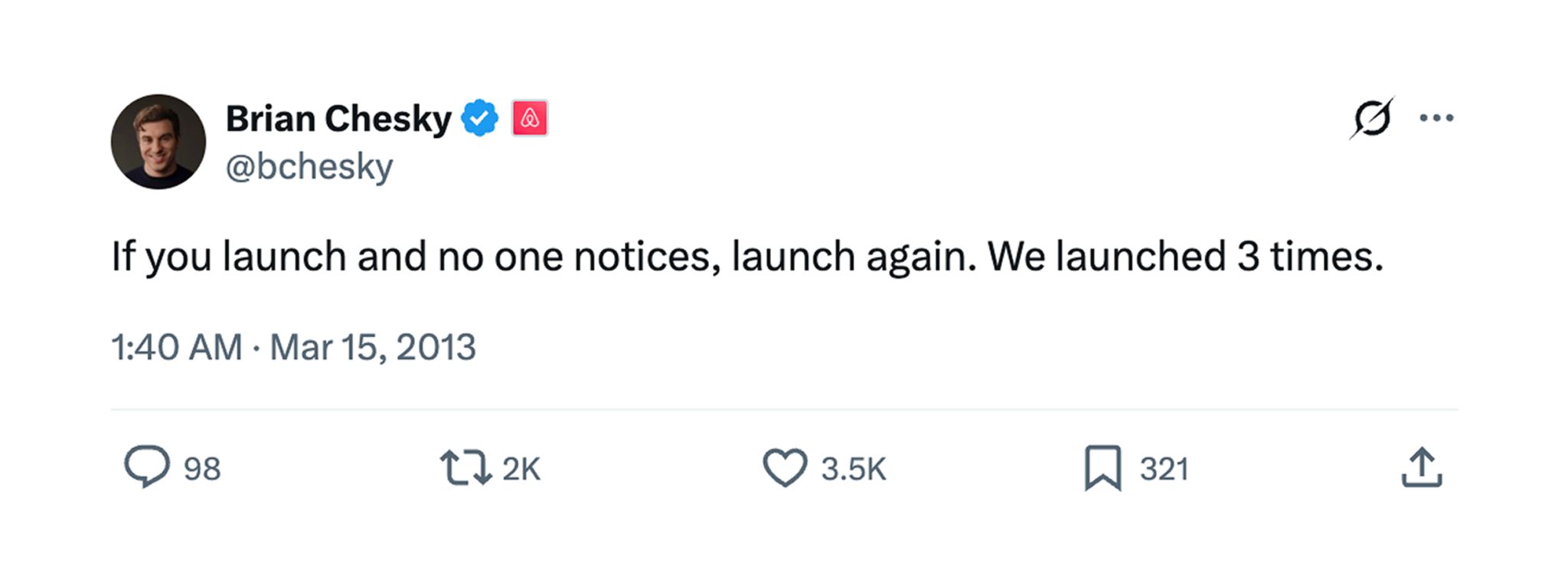
3 launches for the same company. Not 3 products, 3 attempts at getting the same idea to stick the landing.
Why launch is hard at any size
In a large company, launch is an event. A date, an owner, a checklist, a set of assets. The date arrives, the announcement goes out, everyone moves on to the next thing without following the loop.
Smaller companies fail the opposite way. The launch carries too much weight: one moment, one shot, months of anticipation. The moment arrives. And it passes.
Both treat launch as a single event. A moment in time.
Launches are not a point in time, they are a milestone marker of a company's evolution and a celebration of those efforts. An opportunity to engage the market in that transformation.
Why then does it become an exercise in frustration?
Part of it is how narrowly we define the word. A launch does not have to be a product. A service, a partnership, a new position in the market, a research program, a rebrand, an office. Anything that marks a change in what the company is or does is worth launching. The teams that get the most out of this treat all of it as fair game.
But it goes beyond that. It's how we fail to integrate launch into our business as usual routines.
Make launching a habit

The companies that do this well have made launching part of how they operate. There is a rhythm, everyone knows the drill, and no single moment of the dance is make or break. What does it look like?
- A standing cadence.
- A clear bar for what qualifies (bonus points for tiering).
- The same set of processes and assets.
- An owner for each one, shared across the company instead of living permanently with marketing.
- A review two weeks later on one question: who noticed, and how do we know?
2 things happen when launch is a routine. 1) The stakes on any one attempt drop, so people are willing to try something less safe. 2) The mechanics stop being an exception — by the 4th launch the energy goes into the idea instead of the logistics.
It also makes relaunching an ordinary decision. If the first attempt did not take, the next slot is already on the calendar.
One of the hardest parts of launch can be aligning on a shared North Star of what great looks like. We built a free tool to help. kairos walks you through a launch plan and gives you the checklist, the sequence and the owners.
What the rhythm looks like
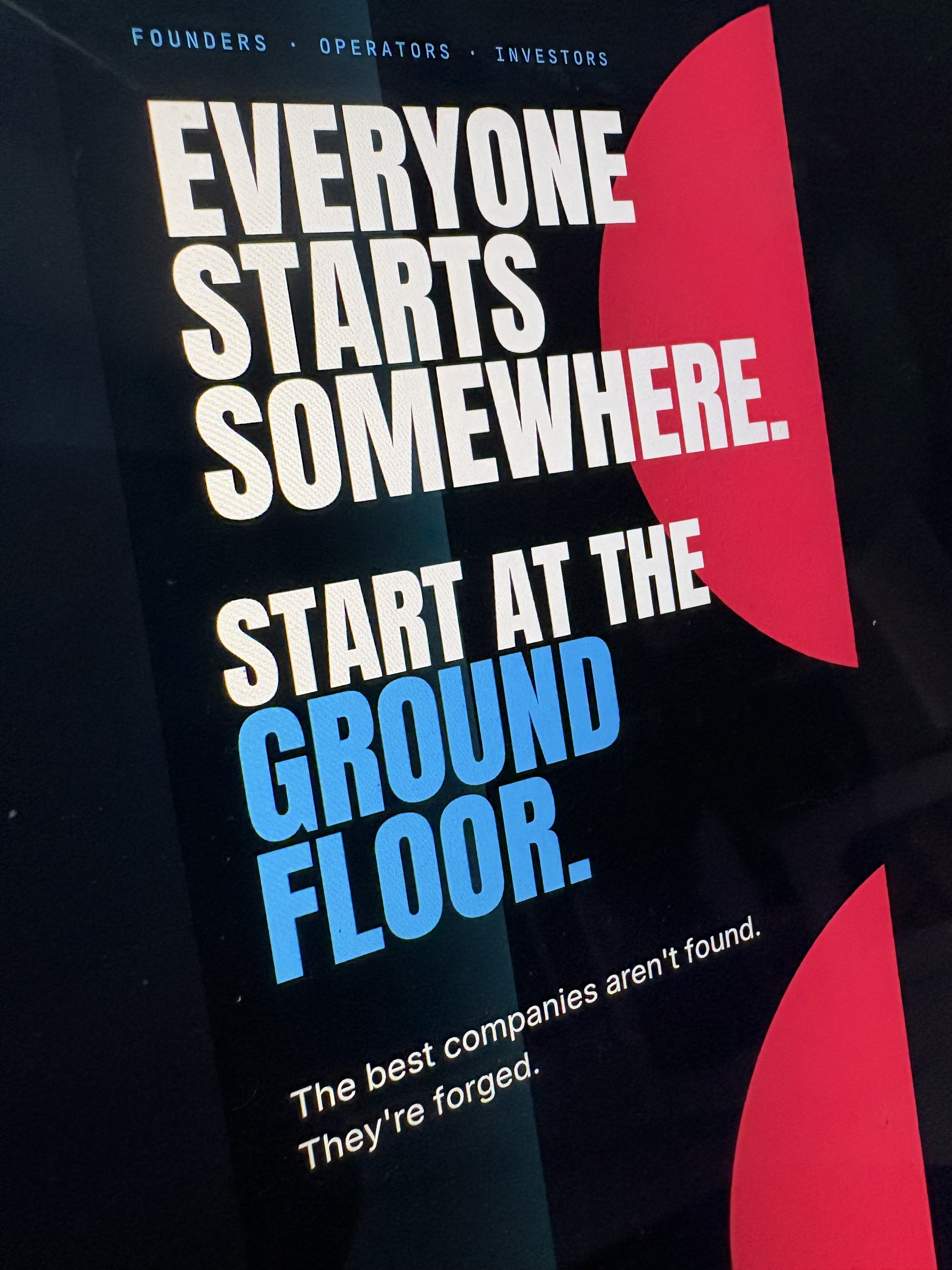
Eudai's own last 5 weeks are a fair example. A major product release with iluminr this week. A partnership podcast with WorldSafe and AlertMedia two weeks before. In early September, a relaunch of Ground Floor with UE Labs.
Three companies, three shapes, one stretch of calendar.

Launch inward as well as outward
For risk and security teams, this works inside the company too. A new process, a policy, a reorg, a new policy, a tool everyone has to adopt. These usually arrive as an email and then get enforced.
An internal launch needs the same things. A reason that is not a mandate. A few people who used it first and will say what changed. A live moment where questions go to a person instead of a document. A check two weeks later on whether anything moved.
For security and governance teams this is often what separates a control people follow from one they route around. The policy gets written either way. Whether anyone adopts it depends on whether it was launched or just posted.
Put customers in it
By the time you launch, your customers should already be involved in whatever you are launching. If the announcement is the first they hear of it, you are asking a press release to do work that belonged to the last six months.
The launches people remember have customers visibly in them, doing more than supplying a quote for the fourth paragraph.
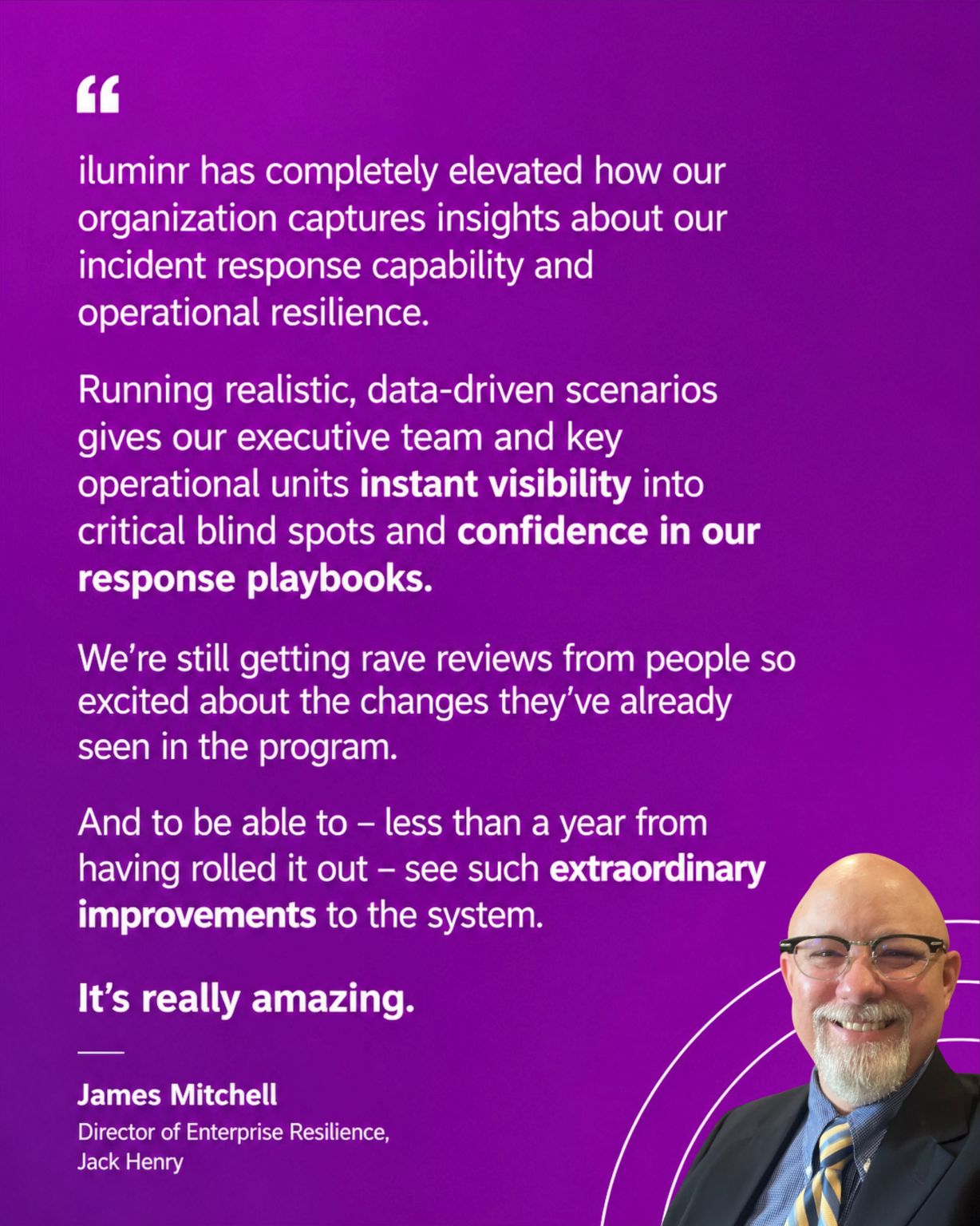
- A small group who used it first.
- A live session where a customer walks through it.
- Naming the customers whose problem shaped the decision.
- Giving customers something to announce to their own peers, so it travels through their networks and not only yours.
Partners belong in this too, and the strongest version is making them part of the launch rather than an audience for it. A channel partner with a quote in the release, an integration partner co-announcing on the same day, a co-authored piece, an association hosting the session — each one brings an audience you would otherwise have to buy, and going to market together makes you stronger for it.
Brief analysts a month ahead of the announcement, if possible, and give them easy to reference talking points for you: how the market is shifting and where this fits, in language they can use in their own writing. An analyst who understood the launch a month early will describe it accurately to buyers you will never meet, with range you don't have on your own.
Someone else saying what changed beats anything you can say about yourself. But better yet, a launch that allows your customer or partner to provide value back to their org is a launch that gives back to everyone.

A launch nobody noticed is just step 1 in the process.
Airbnb launched three times before anyone paid attention. The first two attempts were where the proposition got even more refined and the people who would be part of bringing the idea to the mainstream were brought into the fold.
So launch again. Bring a customer into it this time, or a partner who can carry it further than you can alone. Momentum isn't born in a press release—it's forged in continuous execution.
Free tool: kairos, our free launch planner.
Part of our work on go-to-market strategy.
Was this useful?